Home
Water Intrusion to Full Recovery: What Homeowners Should Know About Professional Restoration
Why Speed and Strategy Matter After a Water Event
Uncontrolled moisture spreads quickly through drywall, flooring, and framing, leading to structural weakness and secondary problems like microbial growth and odors. A disciplined response—assessment, extraction, drying, and verification—reduces damage, shortens disruption, and protects health.
Common Sources and How They Spread
Even small leaks can travel far. Water migrates through capillary action, wicking into porous materials and seeping beneath baseboards, plates, and subfloors. Typical sources include:
- Broken supply lines and failed fittings behind appliances
- Roof or window flashing failures during storms
- Overflow from tubs, toilets, and sinks
- Slab or foundation seepage after heavy rainfall
- HVAC condensate line blockages
The First 24 Hours—A Homeowner’s Game Plan
The earliest actions make the biggest difference in restoring safety and salvaging materials:
1) Stop the source if safe to do so and shut off affected utilities as needed.
2) Protect valuables and move contents out of wet zones to minimize staining and warping.
3) Document conditions with photos and notes for insurance and project tracking.
4) Improve airflow by opening interior doors and removing non-essential rugs or textiles.
5) Avoid switching on ceiling fixtures below wet ceilings and stay clear of sagging drywall.
Extraction, Drying, and Dehumidification—The Core Phases
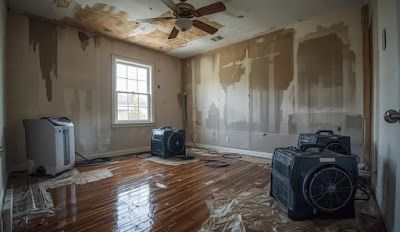
Professional teams prioritize rapid bulk water removal with pumps and weighted extraction tools to minimize saturation. Structural drying follows with air movers positioned to create directional airflow across wet surfaces, while dehumidifiers capture vapor from the air. Technicians monitor temperature, relative humidity, and material moisture levels to adjust the setup for efficient drying curves. The goal is to bring affected materials back to acceptable moisture content without over-drying or causing secondary damage such as cupping in wood.
Finding Hidden Moisture Before It Becomes a Problem
Moisture meters and thermal imaging help locate water behind walls, under cabinets, and inside insulation. If moisture is trapped behind vapor barriers or vinyl, targeted removal or venting may be necessary. Baseboard removal and carefully placed wall cavity drying can save drywall sections and speed recovery. Thorough verification ensures that concealed spaces do not become future sources of odors or microbial growth.
Materials Triage—What Can Often Be Saved
The salvageability of materials depends on porosity and the water source. Non-porous items clean and dry more predictably, while porous materials can require removal if swelling, delamination, or staining is significant. Contents handling may include pack-out, cleaning, and deodorizing. Persistent odors are addressed with source removal, ventilation, and appropriate filtration.
Safety and Indoor Air Quality Considerations
Electric hazards, compromised ceilings, and slippery surfaces are immediate concerns. Personal protective equipment should be used when handling contaminated water or disturbed materials. Air scrubbers and HEPA filtration can help manage particulates during demolition and drying. Responsible disposal and cleaning practices protect occupants as well as workers.
Documentation and Coordination With Insurance
Detailed notes, moisture logs, and drying reports support claims and ensure accountability. Transparent communication around scope, timelines, and material decisions helps align homeowner, adjuster, and restoration team. Proper documentation is also vital if future buyers or inspectors ask for proof of professional mitigation.
Building Back Stronger
After drying and clearance, reconstruction addresses insulation, drywall, flooring, and finishes. Upgrades like water sensors, braided supply lines, and improved drainage can reduce the chance of recurrence. Routine inspections of plumbing, roofing, and HVAC condensate systems further reinforce resilience.
Member Spotlight
Noble Restoration LLC
2266 S Dobson Rd #200
Mesa, Arizona, 85202
602-556-2223
https://noblerestorations.com/
Based in Mesa, Arizona, Noble Restoration LLC serves homeowners and businesses who need reliable response after water, fire, or mold events, including mold removal mesa. Noble Restorations provides fast, reliable water damage restoration, fire damage restoration, mold damage cleanup, and professional mold removal services for homeowners and businesses. When unexpected damage strikes, their experienced team responds quickly to assess the situation, stop further damage, and restore your property safely and efficiently. From emergency water extraction and structural drying to complete mold remediation and mold removal, Noble Restorations uses advanced equipment and proven restoration methods to bring properties back to pre-loss condition. Whether you are dealing with flooding, fire damage, or hidden mold growth, Noble Restorations is committed to providing dependable restoration services with clear communication and quality workmanship you can trust.